MESSAGE
Kentaro Ichihara
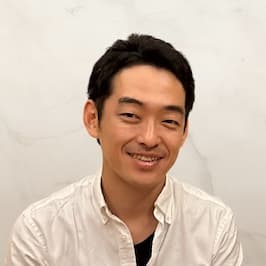
CEO
Kentaro Ichihara
Ten years on Japanese manufacturing floors, then five years at an advanced plant in North America. An engineer who holds both — 和魂洋才.
I have sat on both sides of a software project — the side that commissions it and the side that builds it. Having occupied both chairs, I can tell you that the reason things go wrong is almost always outside the technology.
For fifteen years I worked on the technology side. Controlling equipment, laying out processes, closing quality gaps with numbers. Use the technology correctly and it will answer you — that was fifteen years of believing exactly that.
The assumption broke during the line launch at a joint plant with a North American EV maker in Nevada — and it broke the opposite way from what I expected. The technology was more than sufficient. In fact, the raw ability to turn work into a system, to engineer it as a system, was frankly better there than at home.
Two things were missing. One was genchi genbutsu — going to the actual place and looking at the actual thing. On the drawings and in the numbers everything was correct, but standing in front of the real line and seeing it for yourself was not the habit. The other was an axis: what is this process for? The core that had been drilled into me in Japan — what Matsushita called knowing why you are in business at all — was not running through the organization. So judgment wavered, case by case. Technology and systems alone do not move anything. That is what five years abroad put into my body.
Coming home, I noticed the exact opposite. Japanese factory floors have both the genchi genbutsu habit and the axis. Everyone knows in their bones what the work is for. What is missing there is the ability to turn it into a system. The know-how piles up inside one person's head, scatters across paper and spreadsheets, and disappears the day that person leaves. Conviction alone does not become a system either.
So you need both. The craft of building systems can be imported — AI has now erased even the gap in how fast you can import it. But genchi genbutsu and an axis cannot be bought from outside. And equally, having them without the craft to give them form leaves you with a slogan. 和魂洋才 is not a philosophy to me. It is a record of the fact that the floor would not move until both were present.
So I get on the ground before I build. For the first week or two I work alongside your team and put the gap between management and the floor into words. Only after narrowing it to the one or two problems worth solving do I write any code. That is why someone who spent fifteen years in engineering does not start with engineering.
And I don't make you throw away the tools your floor relies on. Someone who only knows technology will recommend replacing everything, because that is the quickest path for them. Someone who has watched how many years it takes for a workaround on the floor to become good practice will not. The familiar tools stay; we connect them from behind, until everyone on the team sees the same picture of where the company stands and the next move is already decided.
"Wait — you can do that?" That one line from a client is what drives me more than anything. Trying new things is my life's work, and I want to carry that astonishment, and the benefits the technology brings, to the local businesses that need them most. It is why I keep doing this work.
Kentaro Ichihara, CEO
Technology can be imported. What you use it for cannot.
Miss either one and the floor does not move. The raw ability to build systems was, honestly, better over there. But genchi genbutsu and an axis existed only on this side. Having seen both is why I can say you need both.
和魂 — the soul
What it is for
- Ten years on Japanese manufacturing floors
- Genchi genbutsu — checking the actual thing in the actual place, not the drawing
- Knowing how many years it takes for a workaround on the floor to become good practice
- Matsushita's management philosophy as the founding norm
With only this
Conviction that never becomes a system. The know-how piles up in one head and leaves with that person.
洋才 — the craft
How it gets done
- Five years at an advanced plant in North America, leading new-line launches and production stabilization
- Designing and building production equipment and systems
- Development that assumes AI from the start
With only this
You can build the thing, and nobody uses it. Because no one settled what it is for.
An engineer with only one side recommends the quickest path: replace everything. Having both is why your floor never has to throw its tools away.
Profile
Kentaro Ichihara, after completing graduate studies at Shinshu University, worked for 15 years at Panasonic as a battery manufacturing process engineer and SE. Following a posting at an automotive battery plant in Nevada, USA (Panasonic Energy of North America), he became independent. Now based in Kumamoto, he supports a wide range of work, from advanced R&D to business automation and software development for SMEs.
Career
2010 – 2017
Learning the soul of manufacturing
As a battery-process engineer at Panasonic, worked on equipment control and new plant launches. Earned the First-Class Electric Equipment Assembly certification and QC Level 2, absorbing the spirit of Japanese manufacturing.
2017 – 2022
Taking on the world
At a joint plant with a North American EV maker (Nevada), led inspection-process engineering — driving new line launches and production stabilization with diverse teams for five years.
2025 – present
Back to the ground
Driven by "the right technology, for the people who need it, at a fair price," became independent in 2025 and founded Nexa Engineering — as a company's dedicated engineer, delivering systems that take root on the ground through user-first development that starts from a working prototype.